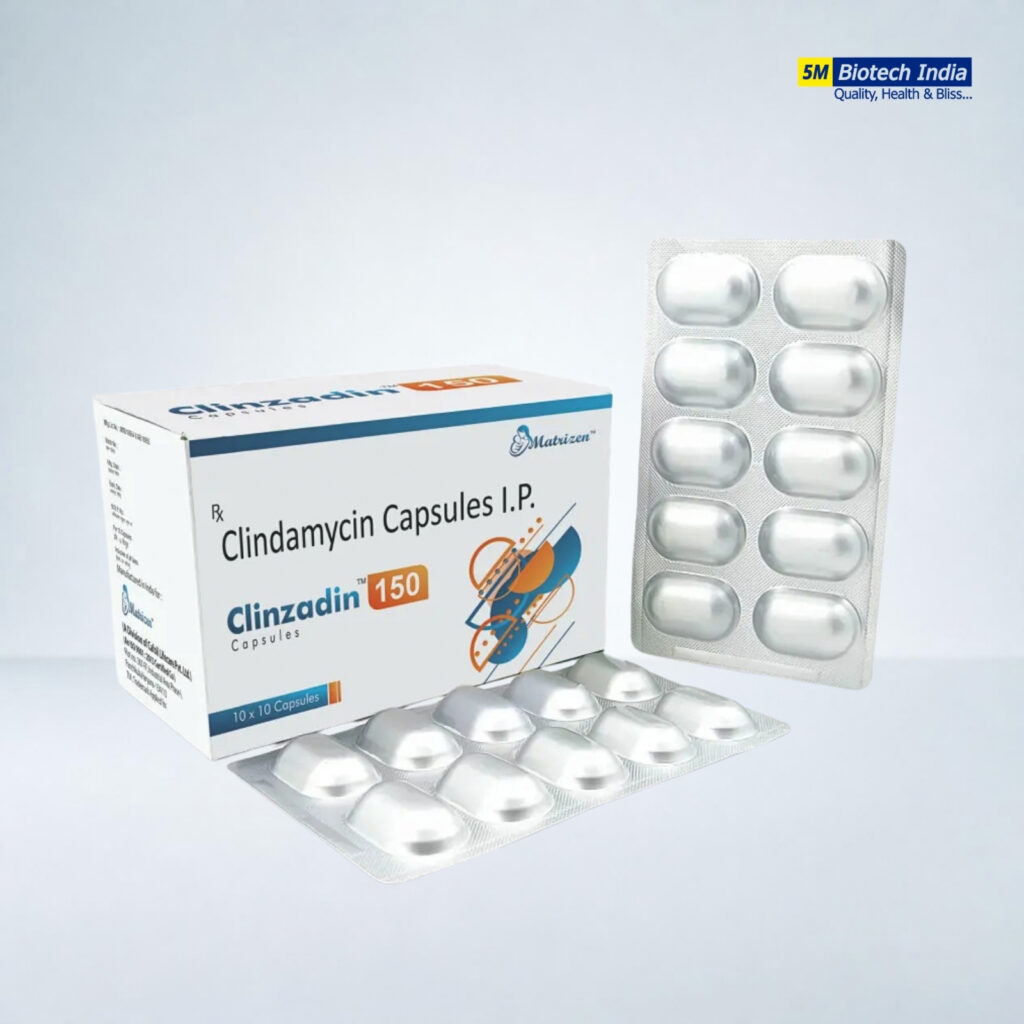
| Active Ingridient | Clindamycin |
| Brand | Clinzadin |
| Country of origin | India |
| Form | Oral Capsule |
Clinzadin Capsule contains the active ingredient Clindamycin, which is a lincosamide antibiotic. It is effective against various bacterial infections in the lungs, skin, throat, stomach, soft tissues, bones and joints, and teeth. Clinzadin Capsule prevents infections by stopping the growth of the bacteria causing infections.
Clinical Uses
Clinzadin Capsule is used to treat various anaerobic bacteria and certain infections caused by Gram-positive organisms. It is effective for treating infections in the skin and soft tissue, respiratory tract infections, bone infections, and dental infections.
Dose Options
Clinzadin Capsule is available in 150 mg and 300 mg strengths. The right dose is determined by the doctor depending on the age and severity of your condition.
How It Works
Clinzadin Capsule works by blocking the production of essential proteins required by bacteria for their growth and survival. It binds to the 50S subunit of the bacterial ribosome, which is a structure that makes proteins. By interfering with this process, it prevents the bacteria from making proteins they need to grow and divide. As a result, this stops the infection from spreading and helps the body’s immune system to clear the bacteria.
Side Effects
Side effects of Clinzadin Capsule include:
- Diarrhea
- Nausea
- Vomiting
- Abdominal pain
- Skin irritation
- Rash
- Vaginal yeast infections
- Liver dysfunction (rare)
Consult your doctor if they persist or if any unusual symptoms occur.
Precautions & Warnings
- Clinzadin Capsule should be used during pregnancy only if it is prescribed by your doctor.
- Clinzadin Capsule should be used with caution in breastfeeding women as it may pass into breast milk in small amounts, causing diarrhea or irritation.
- The use of Clinzadin Capsule is generally safe in patients with kidney disease.
- Patients with liver disease may require monitoring or dose adjustment to prevent any adverse effects.
- Patients with gastrointestinal disease like colitis should use Clinzadin Capsule with caution.
- Avoid using Clinzadin Capsule if you are allergic to Clinzadin (Clindamycin) or related drugs like lincomycin.
Drug Interactions
Clinzadin Capsule can interact with muscle relaxants, other antibiotics, and antidiarrheal medicines. Some medicines are listed below:
- Erythromycin
- Clarithromycin
- Cholera vaccine
- Typhoid vaccine
- Ketoconazole
- Fecal microbiota spores
- Phenytoin
- St. John’s wort
- Rifampin
- Lincomycin
Disclaimer
At 5M Biotech India we provide accurate, reliable and expert reviewed information. However, all our content on this platform is intended for informational purposes only and is not professional medical advice, diagnosis or treatment. While we make efforts to maintain accuracy, the information may contain mistakes, omissions or may not reflect the latest developments. Always consult your doctor regarding any medical concerns.
All medicine names, trademarks, and registered trademarks displayed on 5M Biotech India are property of their respective owners. 5M Biotech India and its operator are not affiliated with, endorsed by or authorized by any such trademark owners unless stated expressly. Any reference to trademarks or product names is made for informational purposes. No sponsorship, commercial relationship, approval or association with any trademark owner should be inferred. Information provided herein does not constitute advertising, promotion or an offer for sale of any medicinal goods and is intended solely for general informational purposes.
All trademarks, trade names, and brand names displayed on this website are used strictly in accordance with the applicable provisions of the Trade Marks Act, 1999, including Sections 30 and 30(1) relating to permitted and fair use. The respective trademark ownership has been duly and accurately identified under the “Manufacturer/TM Owner” section in compliance with applicable statutory requirements.